
COMPETENCE-BASED EDUCATION
Concepts, Standards, and Curriculum Design
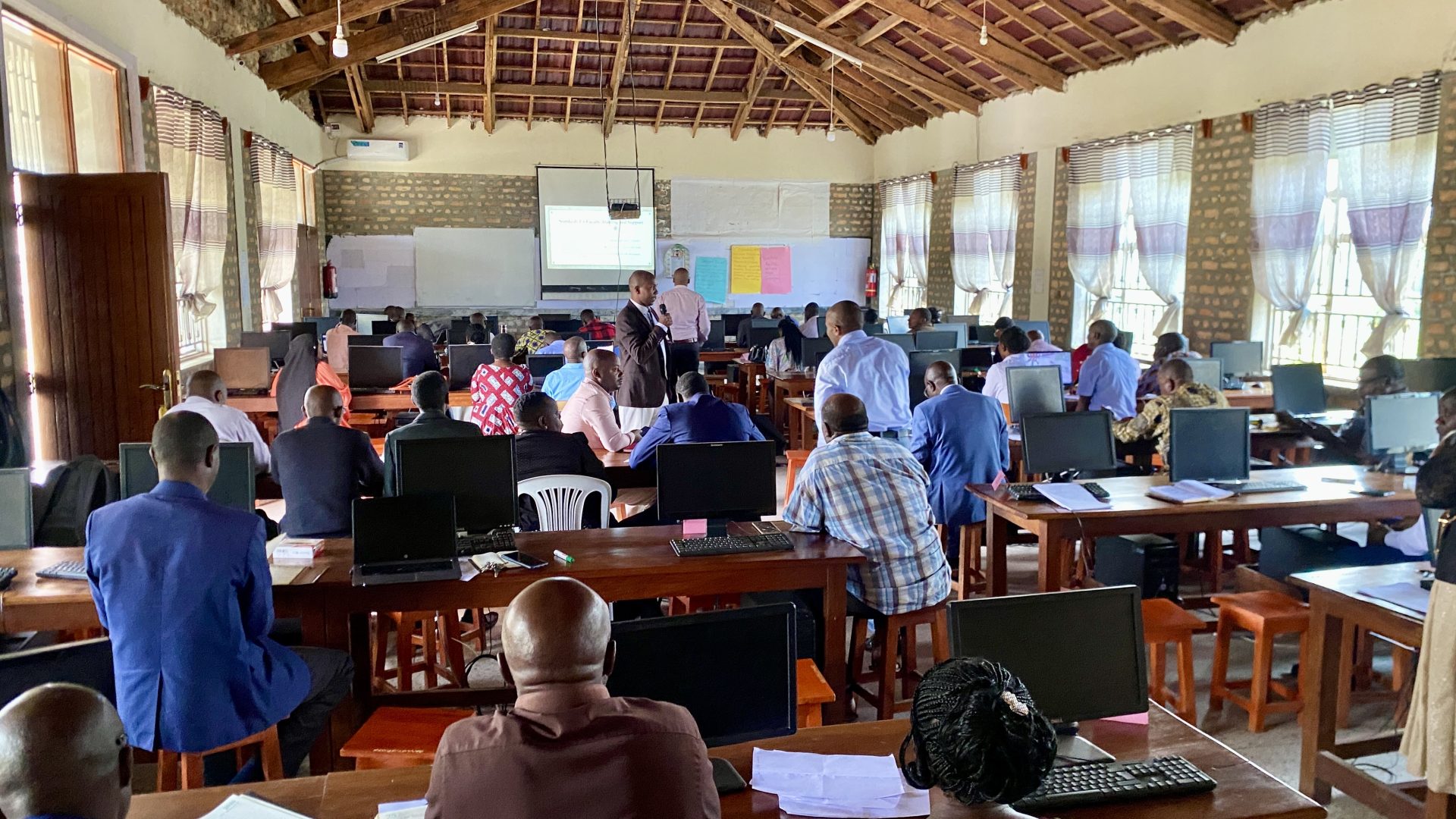
A Training Report from the CBE Faculty Development Workshop
| VENUE
VUST COMPUTER LAB |
DATE
Thursday, 25th June 2026 Day 1 |
FACILITATORS
Mr. Ssempebwa Lauben & Dr. Monica (NCHE) |

EXECUTIVE SUMMARY
On Thursday, 25th June 2026, Valley University of Science and Technology (VUST) in Bushenyi, Uganda hosted a landmark Competence-Based Education (CBE) faculty development workshop, facilitated by Mr. Ssempebwa Lauben and Dr. Monica from the National Council for Higher Education (NCHE). The training brought together academic and administrative staff from across the university’s faculties to deepen their understanding of CBE principles, familiarise them with Uganda’s regulatory standards for CBE implementation, and equip them with practical knowledge for designing competence-based curricula, delivery strategies, and assessment frameworks.
This article provides a comprehensive account of the content, standards, and practical implications of the training, drawing on the official presentation materials produced by NCHE for the session. It is intended as a lasting institutional reference for all staff and stakeholders involved in VUST’s CBE transition journey.

| “CBE is a personalized, outcome-focused learning model where a student’s progression is determined by demonstrating mastery of specific skills and knowledge not the amount of time spent in a classroom.” NCHE CBE Concepts and Standards |
1. WHY CBE? THE NATIONAL AND INSTITUTIONAL CONTEXT
1.1 The Regulatory Imperative
Uganda’s transition to Competence-Based Education is not voluntary, it is a nationally mandated reform backed by the full authority of the National Council for Higher Education (NCHE) and grounded in the Universities and Other Tertiary Institutions Act, 2001 (UOTIA). Section 6 of the UOTIA grants the National Council the authority to regulate, set standards, and manage quality assurance for all public and private universities in Uganda. The Council’s key functions under this mandate include quality assurance, admission standards, equivalence verification, and institutional regulation.
Section 132 of the UOTIA further stipulates that a university shall endeavour to include in its teaching and research programmes solutions to social problems in the community, a provision that CBE directly addresses through its emphasis on real-world application and community relevance.
| GOVERNMENT DIRECTIVE |
| By the academic year 2027/2028, all Ugandan universities must be ready to fully implement Competence-Based Education. Institutions that are not compliant will not be permitted to admit new learners. This directive has made CBE curriculum development and faculty training an urgent institutional priority for VUST. |

1.2 Why the Shift to CBE?
The rationale for Uganda’s adoption of CBE is rooted in a fundamental dissatisfaction with the outcomes of the traditional time-based education model. Academic facilitators at the VUST workshop identified the following core drivers of the CBE transition:
- Employers are demanding graduates who can perform practical, job-ready work from day one of employment. The traditional model, which emphasized time spent in classrooms and pass marks in examinations, frequently produced graduates who could recall information but could not apply it competently in professional settings.
- Some universities explicitly requested CBE frameworks to better serve their students and the labour market, recognizing that their existing curricula were not producing the graduate outcomes their stakeholders needed.
- All universities are now required to review and redesign their curricula under CBE principles. This is not a cosmetic update but a structural transformation of how programmes are conceived, delivered, and assessed.
- The Government of Uganda has set an explicit target: universities must produce graduates who are competent, confident, and capable of contributing meaningfully to the nation and the global economy.
- Teaching and learning methods must shift to place learners at the centre. CBE demands that educators move from the traditional role of knowledge transmitter to that of facilitator, coach, and diagnostician.

2. THE CONCEPT AND PILLARS OF CBE
2.1 Defining Competence-Based Education
Competence-Based Education (CBE) is a personalized, outcome-focused learning model in which a student’s progression through a programme is determined by their demonstrated mastery of specific, pre-defined skills and knowledge not by the amount of time they have spent in a classroom. Unlike the traditional model, in which the academic calendar determines when a student moves from one year to the next, CBE makes mastery the constant and time the variable.
In practice, this means that two students enrolled in the same programme may progress at different rates, depending on how quickly they are able to demonstrate the required competencies. A student with prior relevant experience or exceptional aptitude may accelerate through certain units, while a student who needs more time to develop a specific skill receives targeted, individualized support until they can demonstrate mastery rather than simply being awarded or denied marks at the end of a fixed semester.
This foundational principle has profound implications for how universities design their curricula, train their faculty, organize their teaching schedules, and assess student performance all of which were addressed in detail during the VUST workshop.
2.2 The Five Pillars of CBE
NCHE’s training materials identify five foundational pillars that distinguish CBE from the traditional time-based educational model. Each pillar represents both a philosophical commitment and a practical design requirement for CBE programmes:
| 1 | Mastery Over Seat Time
In the traditional system, the semester defines when students advance. In CBE, mastery defines it. Students move forward only when they can prove through evidence and authentic demonstration that they have fully acquired the required competency. A student cannot simply ‘pass the time’ to progression; they must demonstrate capability. |
| 2 | Flexible Pacing
Because students are not locked into a rigid academic calendar, CBE accommodates diverse learning trajectories. Students who grasp concepts quickly can accelerate through the programme, potentially completing qualifications in less time. Students who need additional support receive it, without being penalized by a fixed examination date that does not account for individual readiness. |
| 3 | Real-World Application
CBE curricula are tied to authentic, professionally relevant tasks rather than abstract exercises or rote memorization. Students are required to demonstrate not just that they know something, but that they can apply that knowledge in real-world or simulated professional contexts. Internships, projects, case studies, and practical sessions are structural requirements, not optional additions. |
| 4 | Student Agency
Learners take active ownership of their educational journey in CBE. They navigate clearly defined, measurable learning objectives through diverse pathways that may include traditional classroom instruction, online learning, self-directed study, workplace experience, and prior learning recognition. This ownership builds the metacognitive skills that employers value in professional environments. |
| 5 | Increased Transparency
Learning progress in CBE is highly visible and explicitly communicated. Students, their families, lecturers, and employers can see exactly which competencies a student has mastered and which require further development. There are no hidden grading curves or ambiguous assessment criteria standards are explicit, measurable, and shared openly with all stakeholders. |
- KEY DIMENSIONS OF CBE PROGRAMMES
CBE programmes are structured around four key dimensions that together define both the architecture and culture of competence-based learning. These dimensions were explored in depth during the VUST workshop and provide the conceptual scaffolding upon which the NCHE minimum standards are built.

3.1 Curriculum and Competencies
The first-dimension concerns how programmes are designed and what they aim to achieve. CBE curriculum design is fundamentally different from the content-driven design of traditional programmes, beginning not with what lecturers will teach, but with what graduates must be able to do.
Explicit Learning Targets.
Competencies in CBE are clearly defined, measurable, and transferable to real-life or workplace scenarios. Every programme must specify, in precise language, exactly what a graduate will be able to do upon completion not merely what subjects they will have studied.
Backward Design.
The curriculum is constructed by starting with the final, highest-level competencies required of a graduate, then working backwards to design the learning pathway, course units, and instructional activities that build towards those competencies. This approach ensures that every element of the curriculum has a direct and documented connection to graduate outcomes.
Relevance.
Skills in CBE focus on real-world applications rather than abstract knowledge. Core competencies such as digital literacy, critical thinking, professional communication, and problem-solving are integrated throughout the curriculum, not treated as supplementary or optional.

3.2 Instruction and Learning
The second-dimension addresses how teaching and learning are organized and delivered. CBE demands a fundamental shift in the role of the educator from transmitter of information to facilitator of learning and competence development.
- Instruction in CBE is highly personalized to meet individual learner needs, learning styles, and existing knowledge. Lecturers must diagnose each student’s current level of competency and design learning experiences that move that specific student towards mastery rather than delivering a uniform curriculum to the entire class simultaneously. Learner-Centred Approach.
- Students move through learning material at their own pace, advancing only when they have fully demonstrated mastery of the current objective. This prevents learning gaps from accumulating a student cannot proceed to advanced content if foundational competencies remain unmastered. Flexible Pacing.
- Lecturers shift from the traditional role of content deliverer to that of facilitator, mentor, and diagnostician. When a student struggles with a particular competency, the lecturer identifies the specific gap and provides targeted support rather than simply moving on with the class schedule. Individualized Support.
3.3 Assessment and Mastery
The third dimension defines how student competency is evaluated and certified. CBE assessment is fundamentally different from the traditional examination-based model, emphasizing ongoing, authentic demonstration of capability over one-time measurement of retained knowledge.
- Assessment in CBE is not primarily about points or examination scores. It requires students to demonstrate their skills in authentic contexts through projects, practical demonstrations, portfolios, and simulated professional scenarios providing evidence that they can apply their knowledge in the real world.
Evidence-Based Evaluation.
- CBE formally acknowledges that students may already possess competencies acquired through previous education, employment, or life experience. The Recognition of Prior Learning (RPL) framework enables students to demonstrate existing competencies and receive credit for them, accelerating their progression through the programme. Prior Learning Recognition.
- CBE emphasizes continuous formative assessment portfolios, projects, practical assessments, and ongoing performance reviews to guide and accelerate learning. Summative assessment (including final examinations) is capped at 50%, ensuring that no single high-stakes event can determine a student’s demonstrated competency.
Formative and Summative Assessment.

3.4 Structure and Culture
The fourth dimension concerns the organizational and cultural environment within which CBE programmes operate. CBE is not only a pedagogical model it is a philosophical commitment to equity, transparency, and evidence-based progression.
- Mastery-Based Progression. Advancement through a CBE programme is determined entirely by demonstrated evidence of mastery, not by the passage of academic time. A student who cannot demonstrate mastery does not proceed and equally, a student who can demonstrate mastery is not held back by a calendar that was not designed with their pace in mind.
- Equitable and Inclusive. CBE structures are deliberately designed to ensure equity, giving every learner a genuine voice, meaningful choice, and equal access to the tools and support they need to succeed. Diversity of learning pathway is a feature of the model, not an exception to it.
- Transparent Standards. Both students and their families understand exactly where each student stands on the learning continuum and what is required to reach the next level. There are no hidden grading decisions or opaque progression criteria standards are explicit, shared, and applied consistently.
- NCHE MINIMUM STANDARDS FOR CBE VALIDATION
The National Council for Higher Education (NCHE) has established eight categories of minimum standards that Ugandan universities must meet before their CBE programmes can be validated and approved. These standards were presented in detail at the VUST workshop and constitute the compliance framework against which all programme documentation and institutional systems will be assessed. Each standard area is detailed below.
4.1 Standards for Curriculum Design
The curriculum design standards govern how CBE programmes are architected and documented. The focus is not on what is taught but on what learners can do and how effectively they apply knowledge, skills, and attitudes in relevant contexts.
- Institutions must align stated competencies with occupational, academic, and societal needs. Programme design must be preceded by evidence of stakeholder consultation, labour market surveys, and industry engagement.
- Programme Learning Outcomes (PLOs) and Course Learning Outcomes (CLOs) must be competence-based written in active, measurable language that describes what a graduate will be able to do, not merely what they will have studied.
- Teaching and learning methods must be clearly specified in the curriculum documentation, demonstrating how each method contributes to competency development.
- A minimum of two internships is required for each programme: one after the second year of study (at least 8 weeks in duration) and another at the end of the programme (at least 15 weeks in duration). These internships must be structured, supervised, and formally assessed.
- Each programme must include a project component a substantial, integrative task that requires students to apply multiple competencies in a real-world or simulated professional context.
- Assessment methods must be specified after every course in the curriculum documentation, demonstrating alignment between what is taught, how it is assessed, and the competency being developed.
4.2 Standards for Teaching and Learning Approaches
These standards govern the pedagogical approaches that CBE programmes must deploy. The emphasis is on enabling learners to develop, apply, and adapt competencies in authentic contexts not merely on transmitting subject knowledge.
- Students must be active participants in the teaching and learning process. Educators must facilitate learning rather than transmit information the lecture-and-recall model is insufficient as the primary mode of instruction in a CBE programme.
- Institutions must create conducive learning environments that simulate real-world scenarios, enabling students to immediately apply what they have learned in contexts that closely mirror professional practice.
- Programmes must deploy Learning Management Systems (LMS) to support blended and online learning, ensuring that flexible pacing and diverse learning pathways are technically supported by the institution’s digital infrastructure.
The recommended teaching and learning methods for CBE programmes include: interactive lectures, problem-based learning, project-based learning, case studies, tutorials and seminars, practical laboratory sessions, field placements and site visits, and guest lectures from industry professionals. The unifying principle is active, student-centred learning every method must engage the student as a producer of competence, not merely a receiver of content.

4.3 Standards for Assessment
Assessment in CBE must be aligned with the stated competencies, continuous across the learning journey, authentic in its methods, and oriented towards performance demonstration rather than knowledge recall.
| CRITICAL ASSESSMENT REQUIREMENT |
| Formative assessment (including coursework, projects, portfolios, practical demonstrations, and continuous assessment tests) must contribute a minimum of 50% of each course’s final grade. Summative assessment including final examinations may contribute a maximum of 50%. Both components must be independently passed. This represents a fundamental departure from the traditional model in which a single final examination could determine a student’s fate. |
- Institutions must establish clear assessment criteria that are shared with students in advance, specifying exactly what evidence of competence is required and at what standard.
- Assessment criteria must include innovative methods appropriate to the competency being evaluated practical demonstrations, portfolio reviews, oral assessments, simulation exercises, and peer and self-assessment where appropriate.
- A variety of assessment methods must be used across each programme, reflecting the diversity of competencies being developed and the multiple ways in which competency can be authentically demonstrated.
- Each institution must establish a robust Recognition of Prior Learning (RPL) framework, enabling students who already possess relevant competencies through work experience, previous qualifications, or life experience to have those competencies formally recognised and credited.
- Institutions must provide ongoing professional development for their staff on effective assessment in CBE, ensuring that all lecturers are equipped to design, administer, and interpret competency-based assessments.
4.4 Standards for Faculty Training and Support
The transformation of a university to CBE delivery is as much a human resources challenge as it is a curriculum design challenge. Lecturers who were trained in and have practised traditional teaching for their entire careers must develop new pedagogical skills, new mindsets about their role, and new capabilities in competence-based assessment design.
- Institutions must develop a formal CBE Training Policy for their faculty, clearly articulating the expectations placed on all academic staff, the timelines within which training must be completed, and the accountability mechanisms that will ensure compliance.
- Institutions must establish a Professional Learning Team or cadre of CBE Champions experienced staff who have received advanced CBE training and are empowered to mentor, support, and guide their colleagues through the transition.
- Institutions must allocate adequate resources time, funding, infrastructure, and technological tools for ongoing faculty training and support. One-off introductory workshops are insufficient; CBE faculty development must be a continuous, structured, and resourced process.
Student support services must also be CBE-ready. Academic advisors, counsellors, and support staff must be trained to address the unique needs of CBE learners, including the navigation of individualized learning pathways, the compilation of competency-based portfolios, and the management of the personal and emotional challenges that can accompany self-directed learning. Peer tutoring programmes, academic mentoring, counselling services, and designated employer linkage offices are all required components of a fully functional CBE support ecosystem.

4.5 Standards for Quality Assurance Systems
Existing institutional quality assurance systems must be strengthened and adapted to support CBE implementation and continuous improvement. Quality assurance in a CBE environment is not a periodic external check but a continuous, internally driven process of evidence collection, analysis, and improvement.
- Institutions must collect and systematically analyse feedback from students, faculty, employers, and other stakeholders to inform ongoing, evidence-based improvements to CBE programmes.
- Quality assurance processes must include regular reviews of instructional practices, learning resources, and assessment methods to ensure sustained consistency with CBE principles as the programme matures.
- QA systems must employ suitable mechanisms including digital tools, structured feedback forms, and stakeholder surveys to capture ongoing data from all parties involved in CBE programme delivery.
- Institutions must establish clear action plans, timelines, and responsibility assignments for implementing the recommendations that emerge from QA reviews, ensuring that quality improvement is not merely identified but actually executed.
4.6 Standards for Industry and Community Linkages
CBE’s fundamental premise that graduates must be equipped with competencies that directly serve the labour market and society requires that institutions maintain active, structured, and mutually beneficial relationships with employers, professional bodies, and community organisations. These are not optional partnerships; they are structural requirements of a functioning CBE system.
- Higher Education Institutions must establish and continuously strengthen strategic partnerships with industry, professional bodies, and community organisations to enhance the relevance and real-world impact of their CBE programmes.
- Curricula must remain aligned with current labour market demands and societal needs, maintained and updated through structured internships, apprenticeships, and community-based projects that create ongoing feedback loops between the institution and the world of work.
- Institutions should create incubation centres or innovation hubs where students, faculty, and industry partners collaborate on product development, applied research, or process improvement creating practical value for all parties and enriching the student learning experience.
- Knowledge-sharing platforms conferences, forums, exhibitions, and dissemination events must be created to share innovations, research outputs, and best practices between the institution and the broader community.
- Institutions must actively mobilise financial, technical, and human resources to support sustainable, long-term engagement with external partners, ensuring that industry linkages are embedded in institutional operations rather than dependent on the personal relationships of individual staff members.
4.7 Standards for Monitoring and Evaluation
CBE is a dynamic model that requires ongoing monitoring and structured evaluation to ensure that programmes are delivering the intended competency outcomes and that challenges are identified and addressed in a timely manner.
- Instructional practices, learning resources, and assessment methods must be regularly reviewed to ensure ongoing consistency with CBE principles, with particular attention to any drift back towards traditional time-based approaches.
- Periodic midstream reviews must be conducted during programme implementation not only at the end of a programme cycle to identify challenges early and make timely adjustments before they adversely affect student outcomes.
- Institutions must employ suitable monitoring mechanisms, including digital tracking tools and structured feedback forms, to capture ongoing data from all stakeholders throughout the programme delivery cycle.
- Clear action plans, with assigned timelines and named responsibilities, must be developed to implement recommendations from monitoring and evaluation activities ensuring that evaluation is connected to institutional improvement, not merely to compliance reporting.
4.8 Standards for Gender Mainstreaming
Gender equality must be systematically integrated into all CBE processes not treated as a separate initiative or an external compliance requirement. From curriculum design through delivery, assessment, and programme monitoring, gender considerations must be embedded at every stage.
- Institutions must demonstrate explicit, documented organisational commitment to gender equality in all CBE processes, including the composition of programme design teams, the language and imagery used in curriculum materials, and the accessibility of support services for all genders.
- All academic and administrative staff must receive continuous training on gender mainstreaming in the CBE context, understanding how gender dynamics affect learning, assessment, and career outcomes.
- A student information pack must be available that comprehensively outlines the support services available to both female and male students enrolled in CBE programmes.
- Gender and equity training sessions must be organised regularly for all student leaders, male and female to raise awareness and develop their competencies in gender-responsive and gender-sensitive leadership.
- A mentoring and accountability framework must be developed that outlines how the institution will collect, monitor, and evaluate its progress in achieving gender equity targets within CBE programmes.
NCHE guidelines further specify governance-level requirements for gender mainstreaming: institutions must establish a gender mainstreaming committee or designate a qualified gender focal person; adopt an institutional Gender Equality Policy aligned with national legislation; allocate a dedicated budget line for gender-related activities and report gender indicators to NCHE; and actively ensure gender balance in recruitment for programmes in non-traditional sectors such as ensuring women are represented in STEM programmes and men in caregiving and nursing disciplines.
5. CBE CURRICULUM DESIGN: THE NCHE FRAMEWORK
5.1 Institutional Foundations for CBE Curriculum Development
A critical insight from the NCHE presentation delivered by Mr. Ssempebwa Lauben at VUST is that effective CBE curriculum development does not begin with courses or credits it begins with the institution’s own identity and strategic direction. Every programme’s design must be traceable back to the university’s institutional foundations, ensuring that what is taught is coherent with who the institution is and what it stands for.
The institutional foundations that must be clearly articulated in every CBE curriculum document include: institutional background and history; vision statement; mission statement; core values; legal status and regulatory mandate; and the governance structure of the institution. These foundations provide the normative frame within which all programme-level decisions are made and justified.
VUST’s governance framework for curriculum management follows the hierarchical structure mandated by NCHE: University Council → Senate/Academic Board → Faculty Board → Departmental Board → Programme Management → Students and Stakeholders. The Quality Assurance Directorate provides a parallel oversight function at every level of this structure, ensuring that all programme design decisions are subject to quality review and institutional approval before NCHE submission.
5.2 The NCHE Curriculum Design Process
The NCHE curriculum design process is a structured, evidence-driven sequence that ensures every programme is grounded in documented need, aligned with national qualifications standards, and validated by relevant stakeholders before it is approved for delivery.
| Stage | Activity | Key Requirement |
| 1 | Needs Assessment | Document skills gaps, employment opportunities, national priorities, industry demand, and research needs |
| 2 | Benchmarking | Compare proposed programme against comparable local and international offerings to ensure level and rigour |
| 3 | Stakeholder Consultations | Engage employers, alumni, students, professional bodies, and community organisations |
| 4 | Curriculum Design | Develop programme using backward design from graduate competencies |
| 5 | Validation | Submit curriculum for external expert and stakeholder validation |
| 6 | Institutional Approval | Senate/Academic Board and University Council endorsement |
| 7 | NCHE Submission | Submit complete curriculum package to NCHE for regulatory review and approval |
The programme development process must be supported by concrete evidence of labour market need: labour market surveys, tracer studies of graduate outcomes, industry consultation reports, professional body endorsements, academic staff needs assessments, employer surveys, alumni feedback, and student input. The intended outcome is a curriculum that is genuinely market-driven and nationally relevant, not merely academically coherent.
5.3 Competence Domains and Programme Learning Outcomes
Every CBE programme must articulate its graduate competence profile across four domains, which together define what a fully qualified graduate will be able to do, know, think, and embody:
| Competence Domain | Description | Examples |
| Knowledge Competences | Theoretical understanding of the discipline’s foundational concepts, principles, and frameworks | Understanding of information systems theory; legal and regulatory frameworks; scientific principles |
| Practical Competences | Technical and professional skills that can be directly applied in relevant work contexts | Software development; clinical procedures; construction techniques; financial analysis |
| Cognitive Competences | Higher-order thinking capabilities that enable complex problem-solving and decision-making | Critical thinking; data analysis; research methodology; creative problem-solving |
| Professional Competences | Ethical conduct, interpersonal, and leadership capabilities required in professional environments | Ethics and professional standards; leadership; teamwork; communication; cultural competency |
Programme Learning Outcomes (PLOs) must be Specific, Measurable, Assessable, and Aligned to the stated competencies. They must be written in active language that describes observable graduate performance. Examples of appropriately written PLOs include: ‘Analyse complex professional problems using appropriate theoretical frameworks’; ‘Design innovative solutions to real-world challenges in the discipline’; ‘Conduct original research using ethical, rigorous methodology’; ‘Demonstrate ethical conduct and professional judgment in all practice contexts’; and ‘Communicate complex technical information effectively to diverse audiences.’
5.4 Qualification Load Requirements and UHEQF Alignment
All CBE programmes at VUST must align with the Uganda Higher Education Qualifications Framework (UHEQF), which specifies the credit load, notional learning hours, and qualification level for each type of academic award. The NCHE applies the standard of 1 Credit = 10 Notional Learning Hours.
| Qualification | UHEQF Level | Credits Required | Notional Learning Hours |
| Higher Education Certificate (HEC) | 4 | 120 | 1,200 |
| Ordinary Diploma (2 years) | 5 | 240 | 2,400 |
| Bachelor’s Degree (3 years) | 7 | 360 | 3,600 |
| Bachelor’s Degree (4 years) | 7 | 480 | 4,800 |
| Bachelor’s Degree (5 years) | 7 | 600 | 6,000 |
| Master’s Degree | 8 | 240–300 | 2,400–3,000 |
| Doctoral Degree | 9 | 540 | 5,400 |
These credit requirements are non-negotiable minimums established by NCHE. Programme designers at VUST must ensure that the total credit load of every programme meets or exceeds the appropriate threshold for its qualification level, and that each credit is supported by a documented 10 hours of notional student learning activity including contact time, self-directed study, practical sessions, internship hours, and assessment preparation.
6. IMPLICATIONS FOR VUST: THE WAY FORWARD
6.1 What VUST Must Do
The CBE workshop held on 25th June 2026 placed clear obligations on Valley University of Science and Technology. The NCHE standards presented are not aspirational targets they are binding requirements for programme validation. The following institutional actions are required:
- Curriculum Review: All existing programmes must be reviewed and redesigned according to CBE principles, with competence-based learning outcomes, backward-designed course structures, mandatory internship components, and clearly specified assessment frameworks.
- Faculty Development: All academic staff must receive structured CBE training. VUST must develop a formal CBE Training Policy, establish a CBE Champions network among trained senior staff, and allocate ongoing resources for faculty development.
- Assessment Reform: Assessment practices across all programmes must shift to ensure that formative assessment contributes at least 50% of each course grade. Novel, authentic assessment methods must be developed that provide genuine evidence of competency.
- Industry Partnerships: VUST must establish and formalize structured partnerships with employers, professional bodies, and community organisations in the Bushenyi region and beyond, creating the internship placements, experiential learning opportunities, and feedback channels that CBE requires.
- Student Support Systems: Academic advisors, counsellors, and support staff must be trained to support CBE learners. Portfolio advising, mentoring, and employer linkage services must be operationalized.
- LMS Deployment: The Learning Management System must be configured and utilized to support blended and online CBE delivery, flexible pacing, and digital portfolio management.
- Quality Assurance Adaptation: VUST’s quality assurance systems must be adapted to CBE, incorporating regular programme reviews, stakeholder feedback loops, and evidence-based improvement cycles.
- Gender Mainstreaming: Gender equality must be systematically embedded in all CBE programme design, delivery, and assessment processes, with a designated gender focal person and formal reporting to NCHE.
6.2 The Broader Significance
| CBE is not a bureaucratic compliance exercise it is a transformation of the university’s fundamental relationship with students, employers, and society. At its best, it produces graduates who are not just credentialed but genuinely capable. |
The shift to CBE represents an opportunity for VUST to fundamentally reposition itself as an institution whose graduates are demonstrably work-ready, whose curricula are genuinely aligned with the needs of the Ugandan economy and society, and whose teaching practices are student-centred, evidence-driven, and continuously improving.
The 25th June 2026 workshop was a beginning, not an end. The concepts, standards, and frameworks presented by NCHE’s facilitators provide VUST with a clear roadmap for the CBE transition. The institution’s responsibility now is to translate this knowledge into structured action across curriculum design, faculty development, student support, industry partnerships, and quality assurance before the 2027/2028 deadline.
The students who will benefit from this transformation are already in our classrooms. The employers who will hire our graduates are already waiting. The credibility of VUST as a provider of quality, relevant higher education depends on how effectively and how swiftly we act on what we have learned.
CONCLUSION
Competence-Based Education is not a trend or an experimental model it is the future of Ugandan higher education, mandated by the National Council for Higher Education and underpinned by a compelling rationale that begins with what students, employers, and society actually need from a university education.
The CBE faculty development workshop hosted at VUST on 25th June 2026 provided participants with a comprehensive grounding in the conceptual foundations of CBE, its five defining pillars, its four key dimensions, and the eight categories of minimum standards that all Ugandan universities must meet to have their CBE programmes validated. Facilitated by NCHE representatives Mr. Ssempebwa Lauben and Dr. Monica, the workshop covered the full spectrum of CBE implementation: from curriculum design principles and UHEQF alignment, through teaching and learning methodology and the assessment framework reform, to quality assurance adaptation, industry linkage requirements, monitoring and evaluation protocols, and gender mainstreaming obligations.
The message from NCHE was unambiguous: by 2027/2028, Uganda’s universities must be CBE-ready, or they will not be permitted to admit new students. For VUST, this deadline is both a challenge and an opportunity a challenge to transform entrenched academic practices within a demanding timeframe, and an opportunity to build an institution whose graduates are genuinely equipped to serve Uganda, the region, and the world.
This article serves as a permanent institutional record of the knowledge shared at the workshop and as a reference document for all VUST staff, students, and stakeholders engaged in the CBE transition. The work of transformation begins now.
SOURCES AND REFERENCES
This article is based on the following official materials presented at the VUST CBE Faculty Development Workshop on 25th June 2026:
- National Council for Higher Education (NCHE). (2026). Concepts & Standards of CBE [PowerPoint Presentation]. Facilitated at Valley University of Science and Technology, Bushenyi, Uganda.
- National Council for Higher Education (NCHE). (2026). Concepts & Standards of CBE [Reference Document]. Workshop handout, VUST CBE Faculty Development Workshop.
- Ssempebwa, L., & Monica, Dr. (2026). Competence Based Curriculum Design, Teaching and Assessment [PowerPoint Presentation]. Presented at Valley University of Science and Technology, Bushenyi, Uganda, 25 June 2026.
- Uganda Government. (2001). Universities and Other Tertiary Institutions Act (UOTIA), 2001. Government of Uganda.
- National Council for Higher Education (NCHE). (2024). Uganda Higher Education Qualifications Framework (UHEQF). NCHE, Uganda.
- National Institute of Standards and Technology. (2024). NIST Cybersecurity Framework 2.0. As referenced in NCHE CBE standards documentation.
| VALLEY UNIVERSITY OF SCIENCE AND TECHNOLOGY
CBE Faculty Development Programme (Faculty of Education) Prepared by the Systems Administration Office |